Bobcat Biting Ice Hockey Stick: A Retro Mascot Illustration for Bold Design Projects
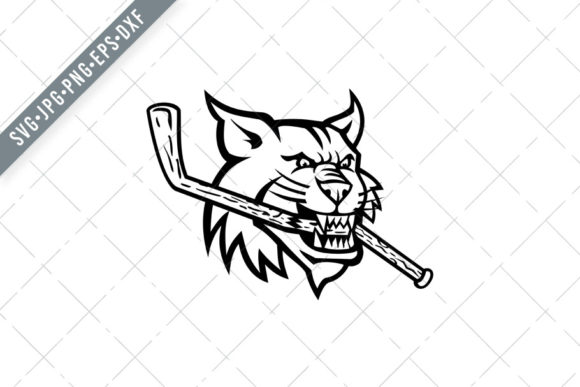
The Bobcat Biting Ice Hockey Stick motif captures a moment of raw intensity and playful aggression that resonates across sports culture, graphic design, and branding. This black-and-white mascot illustration of a bobcat's head—a native North American wildcat—biting a broken wooden ice hockey stick, viewed from the side against an isolated background, delivers a striking visual statement. The retro styling adds a layer of nostalgia and durability that makes the design versatile for both digital and physical applications. Whether you are a hobbyist creating custom apparel, a small business owner building a brand identity, or an educator looking for dynamic visual aids, this artwork offers a robust foundation for countless creative outcomes.
The Visual Language of the Bobcat Mascot
Bobcats are emblematic of agility, fierceness, and independence. In the context of a mascot, the bobcat head conveys alertness and competitive spirit. The Bobcat Biting Ice Hockey Stick illustration amplifies these traits by freezing a moment of action: the cat's jaws are locked onto a fractured wooden stick, suggesting both power and disruption. The side profile view emphasizes the sharp contours of the bobcat's face—the tufted ears, distinctive cheek ruffs, and intense eye—while the broken stick introduces an element of controlled destruction. This combination makes the design particularly effective for sports teams, especially hockey clubs, recreational leagues, and any brand that wants to communicate tenacity.
Black and white rendering is a deliberate choice. Without color distractions, the viewer focuses on line weight, negative space, and the raw energy of the pose. This monochrome approach also simplifies production across various media, ensuring the design retains its impact whether screen printed on a dark T‑shirt, embossed on a leather patch, or engraved on a wooden surface. The isolated background further enhances utility, allowing the bobcat head to be placed seamlessly into different layouts without extraneous elements.
Symbolism of the Broken Ice Hockey Stick
The Bobcat Biting Ice Hockey Stick is not merely a random pairing of an animal and a piece of sports equipment. The broken wooden hockey stick is a loaded symbol in hockey culture. Wooden sticks, while largely replaced by composite materials in professional play, carry a heritage of toughness and raw gameplay. A broken stick signifies a high-impact moment—a hard shot, a blocked pass, or an aggressive check. By incorporating the bite, the illustration suggests that the bobcat itself is the agent of that breakage, adding a layer of defiance and dominance. For teams or individuals who want to project an underdog identity or a "break through barriers" mentality, this image is immediately legible.
From a design standpoint, the fractured stick introduces diagonal lines and jagged edges that contrast with the rounded contours of the bobcat's head. This visual tension creates a more dynamic composition than a simple profile portrait. The broken ends of the wood can be rendered with splintered details that reward close inspection, making the design suitable for large-format prints where texture matters, as well as smaller applications like stickers or labels where precision is key.
Retro Style: Why It Works Across Generations
The retro treatment of this Bobcat Biting Ice Hockey Stick illustration is not an arbitrary aesthetic choice—it is a strategic one. Retro style in design typically references mid-20th century sports graphics, vintage hockey memorabilia, and the bold, screen-printed look of old team logos. This approach resonates with multiple audiences: older consumers who remember the era of wooden sticks and classic mascot art, younger creators who appreciate the authenticity of analog-inspired design, and businesses that want to differentiate themselves in a marketplace saturated with minimalist, flat vector art.
Key characteristics of the retro style in this set include heavy linework, limited shading (often achieved through hatching or stippling), and a sense of hand-drawn imperfection. Unlike sterile digital vectors, retro mascot art feels as though it could have been pulled from a 1970s yearbook or a faded hockey program. This emotional quality adds perceived value to products—customers often pay more for designs that feel historic or collectible. Additionally, the black-and-white palette ensures that the retro vibe does not interfere with color schemes chosen by the end user, making it a flexible base for further customization.
Understanding the File Formats: SVG, PNG, DXF, EPS, and JPG
A single illustration is only as useful as its file ecosystem. The Bobcat Biting Ice Hockey Stick set is delivered with five distinct file types, each serving a specific purpose in the creation workflow. Recognizing the strengths and limitations of each format helps you choose the right one for your project without unnecessary conversion or quality loss.
- SVG (Scalable Vector Graphics): SVG files are the backbone of modern craft cutting. They store the design as mathematical paths, meaning they can be scaled to any size without pixelation. This format is essential for users of Silhouette Studio Cameo, Cricut, and similar cutting machines. The SVG file in this set retains all the detail necessary for vinyl decals, iron-on transfers, and stencil cutting. Because SVG is an open standard, it also works well in web design and digital presentations.
- PNG (Portable Network Graphics) at 300 DPI, 10+ inches: The high-resolution PNG file is optimized for raster-based applications. At 300 DPI and a minimum dimension of 10 inches, it provides crisp output for direct printing on apparel, posters, or canvas. The transparent background allows the bobcat to be placed over other images or colors without a white box. This file is ideal for print-on-demand services, digital mockups, and social media graphics where vector support is limited.
- DXF (Drawing Exchange Format): DXF is a legacy vector format widely supported by CAD software and many laser engraving and CNC routing systems. If you are producing physical goods such as engraved wooden plaques, acrylic signs, or metal badges, the DXF file gives you precise control over cutting paths. It is also compatible with some embroidery digitizing software, expanding the use case to custom patches and puffy prints.
- EPS (Encapsulated PostScript): EPS files are a standard in professional publishing and print production. Graphic designers working in Adobe Illustrator, CorelDRAW, or Affinity Designer can import EPS without losing layer structure or editability. This format is particularly useful when the Bobcat Biting Ice Hockey Stick needs to be combined with other design elements in a brochure, magazine layout, or large-format signage. EPS also supports high-fidelity color separation, which is critical for screen printing.
- JPG (Joint Photographic Experts Group): While JPG is a compressed raster format, it serves a practical role for quick previews, portfolio presentations, and web use where file size matters. The JPG in this set is derived from the high-resolution PNG, so it retains good quality for non-critical applications. Use it when you need to show the design to a client or post it on a marketplace listing, but rely on the vector or PNG formats for final production.
From Digital File to Physical Product: Workflow Examples
Understanding the file formats is the first step; deploying them effectively is where the real value emerges. Consider a few common creative workflows using the Bobcat Biting Ice Hockey Stick illustration.
Apparel decoration: For a custom T‑shirt or hoodie, the SVG or EPS file can be loaded into a vector editing program. If you are using a cutting machine, the SVG file is imported directly into Silhouette Studio or Cricut Design Space. Weed the excess vinyl, apply transfer tape, and heat press the design onto the garment. Because the artwork is monochrome with clear boundaries, it weeding process is straightforward. The retro linework also works beautifully with screen printing: separate the black channels and expose the screens. The EPS file ensures crisp registration marks.
Home décor and wall art: The high-resolution PNG file can be printed on canvas, poster paper, or metal sheets. The 300 DPI resolution ensures that even at a 20‑inch print size, the splinter details of the broken hockey stick remain sharp. For a more texture-forward approach, the DXF file can be sent to a laser cutter to engrave the bobcat onto a wooden panel or acrylic block. The isolated background eliminates the need to mask out unwanted areas before engraving.
Stationery and party supplies: Party invitations, thank‑you cards, and scrapbooking pages benefit from the SVG file's scalability. You can resize the bobcat head to fit a 2‑inch sticker or a 5‑inch card front without losing fidelity. The retro style aligns well with themed parties—hockey tournaments, sports birthdays, or wilderness-inspired events. For digital invitations, the PNG file with a transparent background drops directly into Canva or Photoshop for quick customization.
Accessories and everyday items: Mugs, phone cases, and tote bags are popular print-on-demand products. The PNG file at 300 DPI meets the upload requirements for most POD platforms (Printful, Redbubble, Teespring). Because the design is black and white, it prints consistently on both light and dark substrates, though a white underbase may be needed for dark mugs or shirts. The SVG file can also be used to create a stencil for etching glassware or painting on fabric.
Matching the Design to the Right Audience
The Bobcat Biting Ice Hockey Stick illustration is not a one-size-fits-all graphic, but it appeals to a surprisingly broad demographic. Recognizing these audience segments can help you position the design effectively.
- Sports teams and clubs: Youth hockey leagues, adult recreational teams, and even esports squads that want a mascot with physical presence. The bobcat is a common school mascot in North America, and the hockey stick ties directly to ice sports. The retro style gives the team a classic, established feel.
- Small business owners: Entrepreneurs running hockey-themed shops, craft breweries, or outdoor gear brands can use the design for merchandise without hiring a graphic designer. The multiple file formats mean they can produce stickers, T‑shirts, and coasters from one asset.
- Hobbyists and DIY creators: Scrapbookers, card makers, and vinyl crafters value designs that cut cleanly and look good at small sizes. The bold lines of this illustration are forgiving for beginners using a Cricut or Silhouette machine.
- Educators and community organizations: School spirit wear, fundraiser merchandise, and camp logos often require a mascot that is neither too aggressive nor too cartoonish. The bobcat strikes a balance: it is wild but not frightening, and the hockey stick connects to a popular winter sport.
- Graphic designers and illustrators: Professionals may purchase this set as a base element for larger compositions. The EPS and SVG files can be ungrouped and modified—change the stick to a baseball bat, adjust the eye shape, or add team text. The retro style saves time on creating that vintage feel from scratch.
Practical Considerations When Using the Files
To get the most out of the Bobcat Biting Ice Hockey Stick set, a few technical and creative factors deserve attention.
Scaling and resolution: Vector files (SVG, EPS, DXF) are resolution-independent, but when you export them to raster formats, set the DPI according to the output medium. For large banners, 150 DPI may suffice; for small stickers, 300 DPI is recommended. The included PNG file is already at 300 DPI and 10+ inches, so it is ready for most print jobs without upscaling artifacts.
Cutting machine settings: If you are using a Cricut or Silhouette, test your material settings before running a full sheet. The intricate lines around the bobcat's ears and the splintered stick require a fine-point blade and appropriate pressure. For delicate materials like heat transfer vinyl, a slight offset (also called a "bleed" or "shadow layer") can prevent small details from peeling off after washing.
Color customization: Although the base design is black and white, nothing prevents you from adding color. In vector software, you can fill the bobcat's face with a team color, leave the background transparent, or create a two-tone version. The retro style actually benefits from limited color palettes—one or two accent colors (such as a red eye or a blue stick) maintain the vintage feel while adding brand alignment.
File storage and backup: The zip download includes all five file types. Store the entire folder on your computer or cloud drive. Even if you only need the SVG today, having the DXF or EPS on hand means you can pivot to a different production method later without repurchasing the design.
Why This Design Stands Out in a Crowded Market
Mascot illustrations are abundant online, but the Bobcat Biting Ice Hockey Stick occupies a specific niche that is underserved. Many animal mascots are depicted passively—standing, roaring, or holding a logo. The action of biting a broken stick introduces narrative tension. It tells a story in a single frame: the bobcat is not just present; it is actively overcoming an obstacle. This makes the design memorable, which is the primary function of any mascot or brand mark.
The retro black-and-white style also ensures longevity. Trends in graphic design shift rapidly—gradients, drop shadows, and neon colors date quickly. A bold line-art illustration, however, remains effective decade after decade. It can be used on a vintage-style hockey jersey today and on a minimalist tote bag five years from now without looking outdated. Additionally, the isolated background and multiple file formats lower the barrier to entry for creators who may not have advanced design software. You do not need to be a professional illustrator to produce professional-quality products; you only need the right file and a clear idea of what you want to make.
For those who enjoy mixing mediums, the set also lends itself to hybrid projects. For example, you could laser engrave the DXF file onto a wooden cutting board, then use the SVG to cut a vinyl stencil and screen print the same image onto a matching apron. The consistency across formats means the bobcat's proportions remain identical, creating a cohesive brand line.
Final Thoughts on a Versatile Design Asset
The Bobcat Biting Ice Hockey Stick black-and-white mascot illustration is more than a single graphic—it is a toolkit for creative expression. Its retro styling, clear symbolic content, and multi-format delivery make it suitable for everything from a child's birthday party invitation to a professional sports team's merchandise line. By understanding the strengths of each file type and the contexts where they perform best, you can unlock the full potential of this design. Whether your next project is a one-off sticker or a full product launch, this bobcat is ready to sink its teeth into the work.