How Abstract Gems Seamless Patterns Elevate Your Design Projects
If you have ever spent hours trying to find a background pattern that balances luxury with versatility, you know the frustration. Many stock patterns look repetitive, pixelated when scaled, or simply fail to hold up under close inspection. An Abstract Gems Seamless Pattern solves these challenges by offering a meticulously crafted, high-detail design that works across multiple mediums—from digital backgrounds to physical textiles. Unlike generic ornamental patterns, this asset is built around carefully hand-drawn gemstone motifs, vectorized for infinite scalability, and delivered in multiple formats so you can drop it directly into your workflow.
Whether you are designing a greeting card, a wallpaper for a client, or a web page background that needs to feel premium, understanding how to use a seamless pattern with gem stones will save you time and elevate your final output. Here is a practical look at what this pattern offers, who can use it, and how to get the most out of it.
What Is an Abstract Gems Seamless Pattern?
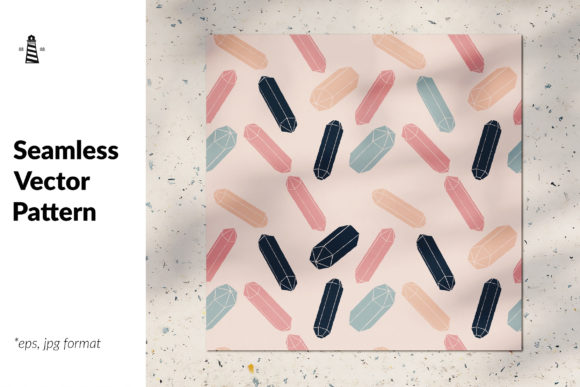
An Abstract Gems Seamless Pattern is a repeating design element that features stylized gemstone shapes—diamonds, crystals, faceted cuts, and organic stone forms—arranged in a cohesive, tileable layout. The key word here is “seamless.” When the pattern repeats, there are no visible edges, seams, or disruptions. This is achieved through precise vector math and careful hand-drawing by a graphic artist.
The particular pattern described here is 100% vector art, created at a massive 69 x 69 inches with 300 dpi resolution. That means you can scale it down to a tiny icon or blow it up to a wall mural without losing clarity. The high detail and hand-drawn quality add a tactile, organic feel that pure geometric patterns often lack. You receive an EPS file, an AI vector file, and a JPG image, giving you flexibility whether you work in Adobe Illustrator, CorelDRAW, or a raster-based program like Photoshop.
Why a High-Quality Seamless Pattern Matters for Your Work
When you are building a brand or a product, the background texture or pattern sets the tone. A poorly executed pattern can make a luxury invitation look cheap, or a wallpaper look dated. Common challenges include:
- Pixelation or blurriness when scaling a pattern from a low-resolution source.
- Visible seams that break the illusion of a continuous surface.
- Lack of depth—simple repeating icons feel flat and uninteresting.
- Format incompatibility—receiving only a JPG when you need vectors for screen printing.
An Abstract Gems Seamless Pattern addresses all of these pain points. Because it is vector-based, you can scale it to any size without degradation. The hand-drawn quality ensures each gem has subtle variations in line weight and contour, creating visual interest. And because it is delivered in EPS, AI, and JPG formats, you can use it in professional design software or even in web tools that require raster images.
Who Benefits Most from This Type of Pattern
Different users will approach this pattern depending on their specific needs. Here are a few common scenarios:
Graphic Designers and Brand Creatives
If you work on branding, packaging, or marketing materials, you need patterns that are both unique and repeatable. An Abstract Gems Seamless Pattern can serve as a background for product labels, a texture for business cards, or a subtle overlay on a website header. The vector format means you can recolor individual gems to match a brand palette without losing detail.
Textile and Surface Pattern Designers
For fabric or wallpaper design, seamlessness is non-negotiable. A pattern that does not tile correctly can ruin a bolt of fabric. This pattern is built for tiling, and the 300 dpi resolution ensures crisp printing on physical surfaces. The 69 x 69 inch canvas size gives you room to work with large repeats without awkward scaling.
Stationery and Invitation Creators
Greeting cards, wedding invitations, and gift wrap require a luxury feel without being overly busy. The hand-drawn gem motif offers an elegant aesthetic that reads as high-end. You can use the JPG version for quick mockups or the AI file for precise placement of text and other elements over the pattern.
Web and Digital Content Creators
Web page backgrounds need to load quickly and look good on retina displays. While the EPS and AI files are ideal for design work, the included JPG at 300 dpi can be optimized for web use. You can create a subtle, repeating background that adds texture without distracting from content.
Practical Applications and Outcomes
Let us look at specific ways you can implement this pattern and what results to expect.
Textiles and Fabric Printing
When printing on fabric, resolution and repeat size matter. The 69 x 69 inch canvas gives you a generous repeat that works well on medium-to-large surface areas. For best results, use the EPS or AI file in your textile design software (such as Adobe Illustrator or NedGraphics). Because the pattern is hand-drawn, it will have a slightly softer, organic look compared to rigid geometric repeats. This is ideal for scarves, cushion covers, or light upholstery.
Wallpaper and Interior Design
Wallpaper patterns need to disappear at the seams. This pattern’s seamless construction means you can tile it repeatedly without visible joints. The high detail ensures that even on a large wall, the pattern remains interesting up close. Consider using a metallic ink or foil effect in printing to make the gem shapes catch light.
Gift Papers and Packaging
Gift wrap benefits from a pattern that looks good both when flat and when folded. The abstract gem motif works across seasons and occasions—birthdays, holidays, or corporate gifts. You can take the AI file and adjust the color palette to match seasonal trends. Because the pattern is vector, you can also create a scaled-down version for small gift tags.
Web Page Backgrounds and Digital Assets
For websites, a seamless pattern used as a background should never compete with text. The gem pattern, with its intricate but balanced composition, works well when opacity is reduced or when used in a muted colorway. Export the pattern at 72 dpi for the web from the JPG source, or create an SVG pattern from the vector file for a responsive solution. The result is a background that adds perceived value and depth without slowing down load times.
Greeting Cards and Invitations
Luxury stationery demands tactile visual quality. Hand-drawn patterns convey craftsmanship. Use the EPS file to print directly onto card stock or letterpress plates. The gem motif can be paired with foil stamping for an upscale finish. The 300 dpi JPG is also suitable for digital printing if you need a quick turnaround.
Recommendations for Getting the Best Results
To fully leverage this Abstract Gems Seamless Pattern, keep the following practical considerations in mind:
- Check your software compatibility. EPS and AI files work seamlessly with Adobe Illustrator, CorelDRAW, and Affinity Designer. If you use a non-standard vector program, request a PDF or SVG version if available. The JPG is a fallback for raster-based software.
- Experiment with color overlays. The hand-drawn lines can be recolored quickly in vector software. Try a monochromatic palette for a subtle look, or jewel tones for maximum impact.
- Scale thoughtfully. Because the pattern is 69 x 69 inches at 300 dpi, you can scale it down without losing detail. For large physical prints, keep the scale at 100% or slightly larger to preserve the hand-drawn texture.
- Test your repeat. Even though the pattern is guaranteed seamless, always run a test tile before committing to a large print run. Some printing processes may shift colors or distort edges.
- Use the JPG for rapid prototyping. For quick client mockups or social media previews, the JPG is faster to work with than vector files. Save the vector file for final production.
How to Integrate the Pattern into Your Workflow
The most efficient way to use this pattern depends on your role and tools. Here is a quick guide:
- Open the AI or EPS file in your vector editor. This gives you full control over every gem’s shape, color, and arrangement.
- Define a color palette that suits your project. If you are working on a cosmetic brand, consider pastel or iridescent tones. For a luxury wallpaper, deep navy with gold accents works well.
- Set your pattern swatch. In Illustrator, drag the artwork into the Swatches panel to create a repeatable pattern. Adjust the tile size as needed.
- Apply the pattern to your desired surface—whether a fabric repeat, a web background, or a card layout.
- Export in the required format for your application. For print, use 300 dpi CMYK. For web, use 72 dpi RGB.
One underappreciated advantage of this pattern is that it saves you the hours it takes to hand-draw and vectorize gemstones from scratch. The artist has already done the labor-intensive work of balancing composition, ensuring seamless repeatability, and maintaining high detail. You can focus on the application rather than the creation.
A Note on Scaling and Resolution
The 69 x 69 inch dimension at 300 dpi means the raster JPG is roughly 20,700 x 20,700 pixels. This is large enough for billboard-sized prints or extremely detailed digital backgrounds. However, if you need a pattern for a small area—like a phone case or a label—you should scale down the vector file in your editing software rather than importing the full-resolution JPG, to keep file sizes manageable.
Final Thoughts on Using an Abstract Gems Seamless Pattern
Whether you are a seasoned designer or a business owner creating your own product line, the quality of your background patterns directly impacts how your work is perceived. An Abstract Gems Seamless Pattern offers a ready-made solution that is both versatile and premium. The hand-drawn element sets it apart from purely digital patterns, giving your projects a crafted feel that resonates with audiences looking for authenticity and detail.
By choosing a pattern that is delivered in multiple formats, with a generous canvas size and high resolution, you eliminate the most common obstacles in design work: poor scalability, visible seams, and limited file types. The result is a smoother creative process and a final product that looks polished, professional, and distinctly original.