How to Integrate an Animal Cartoon Seamless Pattern into Your Creative Workflow
A well-crafted animal cartoon seamless pattern offers more than surface-level charm. Whether you are designing packaging, building a brand identity, or preparing educational materials, the ability to tile a repeating illustration without visible seams saves time and ensures professional consistency. The pattern becomes especially useful when you receive it in a neatly packaged ZIP file containing SVG 1.1, AI 10, and EPS 10 formats. These three vector standards cover nearly every design environment you might work in, from Adobe Illustrator to browser-based SVG editors. Understanding how to prepare, open, organize, and apply this asset across different stages of a project helps you avoid compatibility headaches and keeps your production flow uninterrupted.
This article walks through the practical role an animal cartoon seamless pattern plays before a project begins, during active design work, and after you deliver final files. It also covers how the included formats interact with common tools, how to manage the asset for repeated use, and what to consider when scaling or modifying the pattern for different outputs.
What an Animal Cartoon Seamless Pattern Actually Is
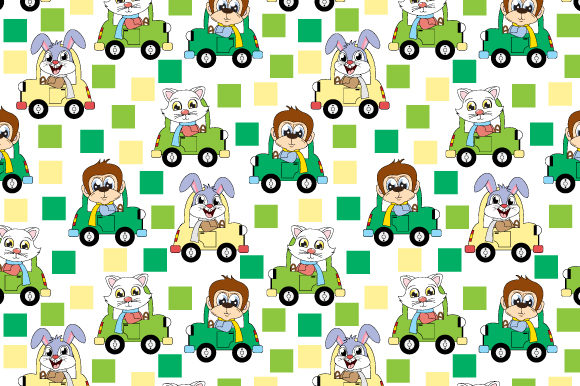
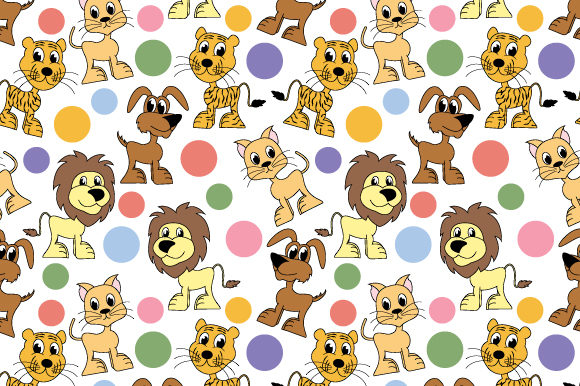
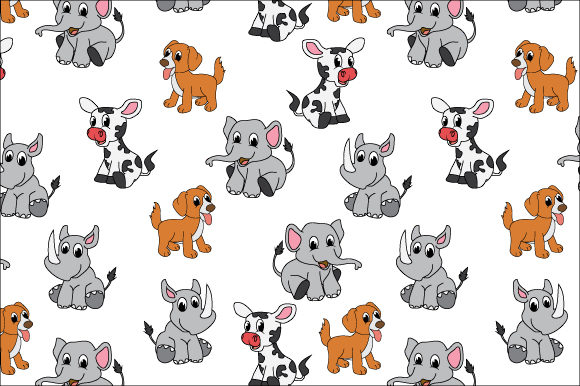
A seamless pattern is a graphic tile designed to repeat infinitely in any direction without visible borders or interruptions. When the subject is animal cartoons, the illustrations are typically simplified, colorful, and playful, making them suitable for children’s products, playful branding, event decorations, or educational resources. The seamless nature means you can fill a background, wrap a surface, or cover a fabric with a single file, and the pattern will continue uniformly.
The ZIP file that contains the pattern in SVG 1.1, AI 10, and EPS 10 formats gives you flexibility. SVG is the web-friendly vector format that works in browsers, design apps like Figma or Canva, and many content management systems. AI 10 is a legacy but widely supported Adobe Illustrator version that opens smoothly in modern versions of Illustrator and many other vector editors. EPS 10 is a standard interchange format that many printing and layout applications still rely on. Having all three means you can open the pattern in almost any professional tool without needing to convert or re-save.
Where the Pattern Fits in a Broader Workflow
Integrating a seamless pattern into a project is rarely a standalone task. It usually connects to a larger process: designing a product line, creating a digital course, producing merchandise, or building a themed website. Thinking about where the pattern lands in your timeline helps you plan better.
Before a Project Begins: Preparation and Planning
When you are in the planning phase, having a ready-to-use pattern on hand can influence your creative direction. Instead of starting from scratch with custom illustrations, you can evaluate the existing pattern to see if its style, color palette, and subject matter align with your concept. This early assessment saves sketching and design time. You can also test how the pattern behaves at different scales by opening the SVG file in a browser or dropping the AI file into Illustrator and resizing it. If the pattern fits, you move forward knowing the asset is already production-ready. If it does not, you can either modify the vector elements or look for an alternative before you commit to a direction.
During this stage, check the file formats against the tools you plan to use. If your team works primarily in Affinity Designer or Sketch, the SVG or EPS versions will likely open without issues. If you are handing the file off to a printer, the EPS 10 format is often preferred. Knowing this upfront prevents last-minute format conversions that can introduce errors.
During Active Design Work: Integration and Customization
Once the project is underway, the animal cartoon seamless pattern becomes a functional element that interacts with other design components. You might use it as a background layer behind text or product images. Because it is vector-based, you can adjust the scale, rotate the tile, or change colors without losing quality. The pattern also tiles seamlessly, so you do not need to manually align repeats when you extend it across a large area, such as a poster, a roll-up banner, or a product package wrap.
If you need to customize the pattern, the AI 10 format is particularly useful because it preserves layers and editable paths in most vector applications. You can add or remove individual animals, adjust spacing, or shift the color palette to match your brand guidelines. The SVG version, meanwhile, is lightweight and can be embedded directly into web projects, interactive PDFs, or digital publications. The EPS file works well when you are sending the design to a print shop that uses older RIP software or requires encapsulated PostScript.
A practical workflow example: Suppose you are designing a set of notebooks for a children’s line. You open the AI file, scale the pattern to fit the notebook cover dimensions, and then use the same pattern, slightly scaled down, for the endpapers. Because the pattern is seamless, you do not need to create separate tiles for each size. The same SVG file can be used for the product page on your ecommerce site, ensuring visual consistency across physical and digital touchpoints.
After Delivery: Archiving and Reuse
After a project finishes, the pattern remains a useful asset for future work. Store the original ZIP file in a well-organized asset library, preferably with tags or keywords that describe the style, subject, and formats. When a new project calls for a playful animal theme, you can retrieve the pattern and reuse it in a different context without re-licensing or re-drawing. The three formats also future-proof the file: if you later switch to a different design tool, one of the three formats will almost certainly open there.
If you deliver final files to a client, consider including the pattern as a separate asset in the format they are most likely to use. A client who manages their own website will appreciate the SVG. A client who sends designs to a manufacturer may prefer the EPS. Providing the right format at delivery reduces support requests and strengthens your professional relationship.
Practical Implementation Tips
Using a seamless pattern effectively involves more than just dropping it into a document. Here are several considerations that affect how well the asset integrates into your routine.
File Organization and Naming
When you unzip the ZIP file, you will likely see three files with similar names but different extensions. Rename them clearly if needed, and store them in a folder that matches your naming convention. For instance, you might use animal-cartoon-seamless-pattern-svg, animal-cartoon-seamless-pattern-ai, and animal-cartoon-seamless-pattern-eps. This avoids confusion when you are searching for a specific format later. If you manage a team, add a brief README note inside the folder explaining the formats and any known compatibility quirks.
Color and Scale Adjustments
Seamless patterns often come in a predefined color palette. If your project requires a different scheme, open the AI or EPS file in a vector editor and use global color swatches to update the hues. Because the pattern is made of individual animal illustrations, you can target specific elements without breaking the seamless repeat. When scaling, keep the pattern proportional to avoid distortion. Test the scaled version at actual size before finalizing, especially if you are printing, because very small repeats can look busy and very large repeats may lose the seamless effect.
Compatibility Testing
Before committing to a design that relies heavily on the pattern, open each format in the software you intend to use. Some older EPS interpreters may struggle with certain transparency effects. SVG files can sometimes handle patterns differently across browsers. A quick test at the beginning of your workflow saves rework later. If you encounter issues, the AI 10 file usually offers the most editing control, allowing you to flatten or simplify elements for better compatibility in other formats.
Interactions with Other Tools and Methods
The animal cartoon seamless pattern does not exist in isolation. It interacts with the software you use, the output medium you target, and the other visual assets in your project. For example, when used in a website background, the SVG file can be referenced in CSS as a repeating pattern, keeping the code lightweight and resolution-independent. In print layout software like InDesign or QuarkXPress, placing the EPS file ensures reliable output at any scale. If you work with a team that uses both Windows and macOS, the AI 10 format opens consistently on both platforms, reducing cross-compatibility friction.
The pattern also interacts with your production methods. If you are producing fabric or wallpaper, the seamless nature of the tile means you can specify a single repeat and trust that the pattern will match across panels. If you are creating digital assets like social media templates, the pattern can be saved as a pattern swatch in Illustrator or as a fill in Photoshop, making it reusable across dozens of graphics with a single click.
Long-term Use and Quality Control
For a pattern to remain useful over years of projects, you need to maintain its quality. Vector formats do not degrade, but the file itself can become corrupted or disorganized if you repeatedly modify and save it without version control. Keep a clean master copy of the original ZIP file. When you customize the pattern for a specific project, save that modified version separately with a project-specific name. This way, you can always return to the original if a later project needs a fresh start.
Quality control also means checking that the pattern truly is seamless. Open the SVG in a browser and tile it across a large area. If you see any lines, gaps, or misalignments, inspect the artboard edges in the AI file. A properly prepared seamless pattern will have edge-matched elements that align perfectly when repeated. If you receive a pattern that is not perfectly seamless, you can often fix it in the AI file by adjusting the position of the outermost elements, but starting with a verified seamless asset is always preferable.
Final Observations for Smooth Integration
An animal cartoon seamless pattern in a ZIP file with SVG, AI, and EPS formats is a practical asset that fits naturally into a wide range of creative workflows. By understanding where it fits before, during, and after a project, you can use it to save time, maintain visual consistency, and reduce technical friction. The key is to treat the pattern not as a final decoration but as a flexible component that interacts with your tools, your team, and your output requirements. With proper organization, testing, and version control, this single asset can serve dozens of projects without losing its quality or relevance.
Whether you are a freelancer managing your own client work, a marketer building branded materials, or an educator preparing classroom resources, taking a few minutes to integrate the pattern thoughtfully at each stage of your process will yield cleaner results and fewer last-minute adjustments. The formats give you coverage, the seamless design gives you consistency, and your workflow gains a reliable building block you can reach for again and again.