Military Truck Military Vehicle Art: Avoiding Common Mistakes with Retro Woodcut Illustrations
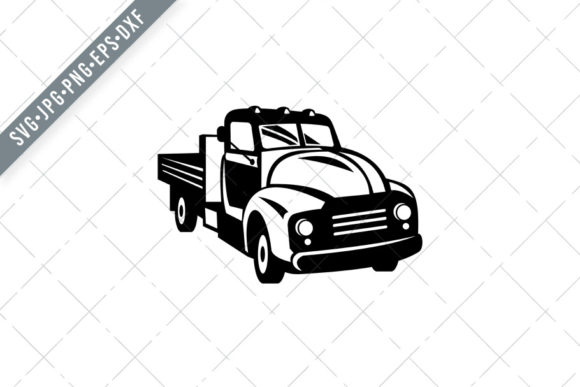
If you have browsed design marketplaces or digital craft resources lately, you have likely come across striking black and white illustrations of military trucks. These retro woodcut-style vector graphics offer a rugged, vintage aesthetic that appeals to creators, small business owners, and hobbyists alike. Whether you are designing a T-shirt for a military appreciation event, creating greeting cards, or building a pattern for scrapbooking, a well-crafted military truck military vehicle illustration can anchor your project with authority and character.
The appeal is understandable. These images evoke strength, history, and purpose. But downloading a set of files and assuming you can use them effectively right out of the box often leads to frustration. Many people end up with distorted prints, blurry details, or designs that simply do not look professional. The good news is that with a little foresight, you can avoid the most common pitfalls and get the results you expect.
Understanding What You Are Actually Getting
A typical set includes an SVG vector file, a high-resolution PNG, a DXF file, an EPS file, and a JPG. That sounds comprehensive, and it is. But each format serves a specific purpose, and treating them as interchangeable is the first mistake people make.
The SVG file is your best friend for use with cutting machines like Silhouette Cameo or Cricut. Because it is a vector format, it scales infinitely without losing quality. The PNG file, while high resolution at 300 dpi and at least 10 inches in size, is a raster image. Enlarge it beyond its intended dimensions and you will see pixelation. The DXF and EPS files are useful for certain CAD or professional design workflows, but they are not meant for everyday printing or web use. The JPG is a compressed raster format that works for previews or low-stakes projects but will degrade quickly if you try to resize it upward.
If you grab the JPG and attempt to scale it up for a large poster, you will end up with a blurry, jagged image. That is not a flaw in the artwork. It is a mismatch between file type and intended use. Always match the format to your output method. For cutting, use SVG. For high-quality printing, use the PNG at its native size or scale the SVG. For quick drafts, the JPG is fine, but do not rely on it for final production.
Overlooking the Importance of Proper Scaling
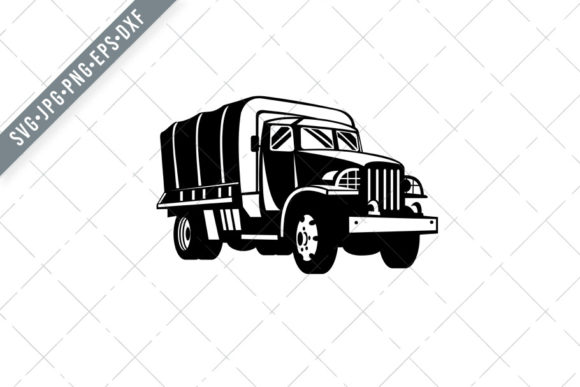
Even with a vector file, scaling a military truck illustration incorrectly can ruin the proportions of your design. The front-view perspective of a military vehicle is inherently symmetrical and balanced. If you stretch the width without constraining the aspect ratio, the truck looks squashed or elongated. That might seem like a minor detail, but it is immediately noticeable, especially in a woodcut style where lines and contours are deliberate.
Always lock the aspect ratio when resizing in your design software. This is a basic step, but it is surprisingly easy to forget when you are in a hurry. Also, consider the scale relative to your canvas. A military truck that takes up 90 percent of a T-shirt front might look imposing, but it can also overwhelm the garment. Leaving breathing room around the illustration preserves the vintage, stamp-like feel that makes the woodcut style work.
Another scaling mistake relates to the PNG file. The set you download promises a 10-inch or larger size at 300 dpi. That gives you a solid base for many projects. But if you need a 24-inch banner, the PNG will not hold up. In that case, use the SVG or EPS to export a fresh raster file at the correct dimensions. Do not simply stretch the existing PNG. The difference in sharpness will be stark.
Ignoring the Background and Isolation Details
The description says the illustration is viewed from the front on an isolated background. That means the truck itself is cleanly separated from any backdrop, which is ideal for most applications. However, people sometimes assume the background is truly transparent in every file. In many sets, the JPG and even the PNG may have a white or off-white background. Only the SVG, DXF, and EPS are likely to have true transparency.
If you place a JPG with a white background onto a colored shirt design or a dark card, the white rectangle will stand out. That is not the artwork failing. It is a file format limitation. Always check the transparency of your chosen file before dropping it into a layout. Use the SVG or the transparent PNG for projects where you want the truck to float seamlessly over another color or texture.
This is especially important for woodcut black and white illustrations. The high contrast between solid black lines and negative space is part of the charm. A white box around the image kills that effect instantly. Take the extra thirty seconds to confirm your file is actually isolated, and you will save yourself from reprinting.
Choosing the Wrong Application for the Style
The retro woodcut style has a hand-carved, imperfect quality. That is its strength. But some people try to use it in contexts where a sleek, modern vector icon would be more appropriate. A military truck illustration with rough edges and bold line work is perfect for a rugged outdoor brand, a veteran-owned business logo, or a historical reenactment flyer. It feels less natural on a corporate PowerPoint slide or a minimalist modern website.
Understanding where this style shines helps you avoid forcing it into projects where it will look out of place. If your goal is a clean, contemporary look, a woodcut military vehicle might clash no matter how well it is executed. That is not a problem with the artwork. It is a mismatch of style and context. Choose your projects intentionally. This illustration works beautifully for apparel, posters, greeting cards, party invitations, scrapbook layouts, and stencil designs. It also fits well in educational materials about military history or transportation. Just do not try to make it something it is not.
Neglecting to Test Before Production
Perhaps the most avoidable mistake is running straight to final production without testing. Whether you are printing a batch of T-shirts, cutting vinyl for a mug, or creating a set of greeting cards, do a test run first. Print one shirt. Cut one stencil. Make one card. Check the sizing, the contrast, and the overall appearance.
If you are using the SVG with a cutting machine like Cricut or Silhouette, test the cut on inexpensive material first. The intricate line work in a woodcut illustration can be dense. Small details may not cut cleanly on certain materials. Adjust your cut settings or simplify the design if needed. The same goes for printing. A proof print on regular paper costs pennies and can save you from wasting expensive transfer paper or fabric.
People often skip this step because they are eager to see the final product or they assume the file will work perfectly. Digital files are reliable, but every printer, cutter, and material behaves a little differently. A quick test gives you the chance to catch issues before they become costly mistakes.
Misunderstanding Licensing and Usage Rights
This point is less about the file itself and more about how you use it. When you purchase a digital set of military truck illustrations, you are typically buying a license for personal or small commercial use. That usually means you can make T-shirts to sell at a craft fair or use the design on your blog. It does not mean you can resell the digital files themselves, include them in a larger design pack you sell, or use them in mass-produced merchandise without checking the terms.
Freelancers and small business owners are especially prone to overlooking this. If you use the illustration in a logo for a client, make sure your license allows that. If you want to use it on products sold through a large retailer, verify there are no quantity limits. The artist who created the retro woodcut style deserves fair compensation, and respecting the license keeps you out of legal trouble. When in doubt, read the license file included in the download or contact the seller.
Making the Most of the Variety of File Types
A set that includes SVG, PNG, DXF, EPS, and JPG gives you flexibility, but only if you understand what each one does. Let the SVG be your primary tool for scalable projects. Use the EPS if you work in Adobe Illustrator or CorelDraw and need a vector file that preserves layers or effects. The DXF is your go-to if you use CAD software or certain laser cutters. The high-resolution PNG is your best option for quick printing without vector editing software.
Keep all the files in a folder on your computer so you can grab the right one when a project comes up. Trying to convert a JPG to a vector later usually yields poor results. Having the original vector files saved means you never have to settle for a degraded version. Organize your downloads well, and you will save yourself hours of frustration down the road.
Practical Advice for Better Results Every Time
Before you start your next project, take a moment to plan. Ask yourself what the final output will be. If you are making a T-shirt, the SVG or a high-resolution PNG exported from the SVG will give you the best result. If you are creating a stencil for wall art, the DXF or SVG with clean cut lines is ideal. If you are designing a digital invitation or a social media graphic, the PNG at its native size is perfect.
Check the dimensions early. The set advertises a size of at least 10 inches at 300 dpi. That is generous and gives you room to work. But if you need something significantly larger, scale the vector, not the raster. If you need something smaller, scaling down is usually safe with any format, but keep an eye on line thickness. Very small prints may lose detail in the woodcut lines, so test a tiny version before committing.
Think about the color palette as well. The black and white style is striking on its own. Adding color to the background or using the truck as a one-color print simplifies production and maintains the vintage feel. If you add colors, keep them muted or earth-toned to complement the retro aesthetic. Bright neon colors can fight with the woodcut texture and create visual noise.
Building Projects That Stand Out
Creators who use these illustrations well do not just drop them onto a blank canvas. They pair the military truck with complementary elements like period-appropriate typography, distressed textures, or simple geometric borders. The woodcut style invites a handmade, tactile quality. Lean into that. Use it on kraft paper backgrounds, fabric with a natural weave, or digital canvases with a subtle grain overlay.
If you are designing for a military-themed event, a reunion, or a historical project, this style gives you an authentic anchor. It also works for everyday items like coffee mugs, tote bags, and phone cases. The key is treating the illustration as a deliberate design choice rather than a quick fill. When you respect the art, your audience will notice the difference.
Entrepreneurs and small business owners can use these illustrations to create a distinct brand identity. A woodcut military truck on your packaging or website header communicates durability, tradition, and no-nonsense reliability. That is a powerful message if it aligns with your brand values. Just be consistent. Use the same illustration style across your materials, and your brand will feel cohesive.
Final Thoughts Before You Start
A retro woodcut black and white military truck illustration from the front view is a versatile piece of art. It can work in dozens of projects, from apparel to decor to digital content. But the difference between a professional-looking result and a disappointing one often comes down to small choices. Choose the right file format. Scale correctly. Confirm transparency. Test before you produce. Respect the license. And use the style in contexts where it belongs.
When you pay attention to these details, you get the crisp lines, the bold contrast, and the timeless character that drew you to the illustration in the first place. That is the whole point. The files are tools. How you use them determines the outcome. Take the extra few minutes to do it right, and your military truck design will look exactly as strong and purposeful as it should.