Ocean Shells. Vector Pattern: A Practical Design Resource for Creators and Businesses
If you have ever tried to find a reliable, reusable pattern that actually works across different projects, you know how frustrating it can be. You find something that looks good on screen, but when you try to use it on fabric or in a digital layout, the scaling is off, the file format is wrong, or the repeat is broken. That is exactly why a well-prepared vector pattern set like Ocean Shells. Vector Pattern exists. This is not just a single image file. It is a thoughtfully assembled ZIP archive containing three essential file formats—EPS, SVG, and PNG—all built on a clean 550 x 590 artboard. Whether you are designing for print, screen, or physical products, this kind of resource saves time, reduces headaches, and gives you a solid foundation to build on.
What You Are Actually Getting
Let me walk through what is inside the folder so you know exactly what you are working with. The archive contains three files, each serving a different purpose. The EPS file is ideal for professional vector editing software like Adobe Illustrator or CorelDRAW. It preserves all the paths, shapes, and scalability so you can resize the pattern to fit a billboard or a business card without losing quality. The SVG file is perfect for web and digital use—think website backgrounds, social media graphics, or even interactive elements in a digital publication. The PNG file gives you a ready-to-use raster version on a 550 x 590 artboard, which is great for quick previews, mockups, or situations where you do not need to edit the vector paths. Having all three in one folder means you do not have to convert or hunt for missing formats later.
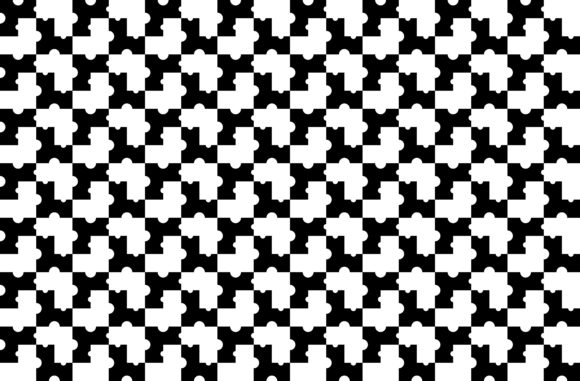
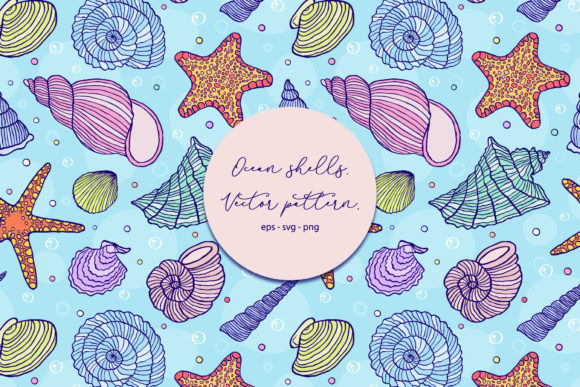
The pattern itself draws from ocean shell motifs—repetitive, flowing, and natural in a way that works well across many contexts. It is not overly busy or distracting, but it carries enough visual interest to stand on its own. That balance is harder to find than most people realize. Many seamless patterns either look like wallpaper from a cramped waiting room or feel too sparse to be useful. This one sits in a practical middle ground.
Fabric and Textile Design
If you are a fabric designer, a small-batch clothing brand owner, or someone who prints custom textiles for home sewing, you already know that a seamless repeat is nonnegotiable. Ocean Shells. Vector Pattern works beautifully on cotton, linen, or even performance fabrics if you are printing digitally. The scale of the pattern on the 550 x 590 artboard means you can tile it without awkward cutoffs or mismatched edges. Imagine printing a lightweight summer scarf with a subtle shell motif scattered across the fabric. Or consider a line of throw pillows for a coastal-themed home decor collection. The pattern gives you a consistent, professional repeat that does not look like an afterthought.
One practical scenario: you are a small business owner preparing a new line of beach towels. You want something that feels relaxed but not childish. This pattern, depending on the color palette you choose, can be printed in muted sandy tones or soft aqua blues, and it will read as sophisticated rather than kitschy. Because the vector file is editable, you can recolor individual shells or adjust the spacing between elements to better suit your fabric width and print method.
Wallpaper and Home Decor
Wallpaper is making a strong comeback, and not just in bathrooms. People are using it on accent walls, inside bookshelves, on ceilings, and even in rental-friendly removable formats. Ocean Shells. Vector Pattern is a natural fit here. It works in coastal-themed rooms, obviously, but do not limit it to that. A subtle shell pattern in a neutral palette can add texture to a study, a reading nook, or a hallway without screaming "beach house." If you are an interior decorator or a DIY homeowner, you can use the SVG file to create a custom wallpaper sample, print it on demand, or even upload it to a platform that prints peel-and-stick wallpaper.
Think about a nursery or a child's room. Shell motifs are gender-neutral, nature-inspired, and visually calming. You could use the pattern on one accent wall, then pull matching colors for bedding and decor. Because the files are vector-based, you can also scale the pattern larger or smaller depending on the room size and the visual impact you want.
Stationery and Cards
Stationery designers and paper goods sellers have a constant need for patterns that work at small scales. A pattern that looks great on a 12-inch fabric swatch might look cramped or blurry on a 4-inch greeting card. With Ocean Shells. Vector Pattern, the artboard size gives you a clean repeat that can be scaled down without losing clarity. Use it for notecards, wrapping paper, gift tags, or even the inside liner of an envelope.
For example, if you run an Etsy shop selling handmade stationery, you can create a set of thank-you cards with the shell pattern printed as a subtle background, then layer a simple handwritten-style greeting on top. The same pattern could appear on matching stickers, sealing wax wrappers, or a small notebook. Customers appreciate cohesive branding, and having a reliable pattern resource makes that consistent look achievable without designing from scratch each time.
Packaging and Product Labels
Packaging is one of those areas where a pattern can make or break a product's shelf appeal. Whether you are packaging bath salts, organic lotions, candles, or gourmet snacks, a shell pattern immediately signals a natural, coastal, or handcrafted vibe. Ocean Shells. Vector Pattern can be used on box inserts, wrapping paper, hang tags, or as a background on product labels. The EPS file gives you the flexibility to adjust the pattern to fit unusual package shapes or die-cut lines.
Consider a small business that makes handmade sea salt soaps. The pattern on the soap wrapper ties the product visually to the ocean, reinforcing the natural ingredients and the brand story. You can print the pattern on kraft paper for a rustic feel or on glossy stock for a more polished look. Having the PNG file handy also means you can quickly mock up a package design in Canva or similar software without opening a vector editor.
Digital and Web Use
Not all applications are physical. Bloggers, content creators, and digital product sellers need patterns for website backgrounds, social media templates, email headers, and digital planners. The SVG format is particularly useful here because it scales cleanly on retina displays and loads efficiently on websites. If you are a blogger writing about coastal living, sustainable fashion, or ocean conservation, a subtle shell pattern in your site header or sidebar adds visual interest without distracting from your content.
Digital planners and printable organizers are another growing niche. Many creators sell PDF planners on platforms like Etsy or Gumroad, and a tasteful pattern on the cover page or section dividers increases perceived value. Ocean Shells. Vector Pattern can be used as a watermark, a background, or a decorative border. Because the files are editable, you can adjust opacity and positioning to keep the pattern from overwhelming the functional parts of the planner.
Who Benefits Most from This Resource
It is worth thinking about which types of users get the most value from a pattern set like this. Freelance graphic designers often work with tight deadlines and multiple clients. Having a clean, scalable vector pattern on hand means you can pull it out for a mood board, a client presentation, or a quick mockup without starting from a blank canvas. Small business owners who handle their own design work—perhaps using tools like Affinity Designer, Inkscape, or even PowerPoint with vector support—can save hours of manual pattern creation.
Educators and homeschool parents might use the pattern for classroom decor, worksheets, or activity sheets with a nature theme. The SVG file can be embedded into teaching materials or printed on cardstock for crafts. Hobbyists who enjoy bullet journaling, scrapbooking, or card making can print the PNG file at home and use it as a background or cutout element. The pattern is versatile enough that it does not require professional design skills to use, but it is robust enough to satisfy professionals who demand precision.
What to Consider Before You Use It
Before you download and start applying Ocean Shells. Vector Pattern to your project, there are a few practical things to think through. First, consider the color palette. The pattern itself comes in its own color scheme, but because it is a vector file, you can recolor it easily. However, if you are not comfortable working with vector software, you might be limited to the original colors. If that is the case, make sure the existing palette fits your brand or project aesthetic before committing.
Second, think about scale. The pattern was created on a 550 x 590 artboard, which is a specific size. When you tile it, the repeat frequency depends on the size at which you print or display it. Test the pattern at different scales to see how it behaves. A pattern that looks delicate on a small artboard might become bold and heavy if scaled up too much. Vector files make this adjustment easy, but it is still worth previewing.
Third, consider your printing method. If you are printing on fabric, run a small sample first to ensure the pattern aligns correctly on your fabric width and that the repeat does not create unwanted seams. For digital printers, the SVG or EPS file is usually fine, but always check with your printer about supported file types. The PNG file is a convenient fallback, but it is rasterized, so enlarging it beyond the original artboard size may introduce pixelation.
Fourth, think about copyright and licensing. This resource is designed for commercial and personal use, but you should always review the specific license terms that come with your download. If you plan to sell products featuring the pattern, ensure your usage is covered. That is a standard step with any design resource, and it protects both you and the creator.
Real Outcomes from Using This Pattern
Let me paint a few realistic pictures of how this pattern might actually perform in the hands of different users. A freelance designer working on a branding package for a coastal bed-and-breakfast could use the pattern on the brand stationery, website footer, and even the room key tags. The client gets a cohesive visual identity without the designer spending hours creating a custom pattern from scratch. The designer saves time, the client gets a professional result, and the pattern does the heavy lifting.
A mom running a small home decor shop on Instagram could use the pattern to create a line of custom-printed pillow covers. She uploads the SVG to a print-on-demand supplier, chooses her fabric and colors, and within a week she has samples to photograph. The seamlessness of the pattern means the pillow covers look polished, not like a DIY experiment. Her customers notice the quality, and the products sell.
A high school art teacher preparing a unit on pattern design could use the files as teaching examples. Students see how a vector pattern is structured, how repeats work, and how the same pattern behaves in different formats. The teacher does not need to design a whole pattern from scratch to demonstrate the concept. The resource becomes a teaching tool, not just a production asset.
Why This Format Matters
The decision to deliver three files in one ZIP folder is not arbitrary. It reflects how people actually work. Some users prefer the flexibility of EPS for professional print workflows. Others need lightweight SVG files for web projects. Still others want a quick PNG for previews or simple layouts. By including all three, the resource eliminates the common friction point of missing or incompatible files. You do not have to ask for a different format or try to convert something that was never meant to be converted. It is all there, ready to go, on the same 550 x 590 artboard.
That consistency across formats is more valuable than it sounds. It means the pattern looks the same whether you open it in Illustrator, drop it into a website builder, or print it from a home printer. There are no surprises, no color shifts, no scaling distortions. For anyone who has ever spent an afternoon troubleshooting a broken pattern repeat, that kind of reliability is worth paying attention to.
Ocean Shells. Vector Pattern is not a miracle solution, but it is a solid, well-prepared tool that fits into real workflows. It works for professionals and beginners alike. It works across media. And it saves you from having to build something from scratch when what you really need is a reliable foundation to start creating.