Seamless of Four Arrows Tile Pattern: A Modern Monochrome Design System for Creators and Professionals
Minimalism and repetition have always been at the heart of compelling visual design. Yet few motifs manage to balance geometric precision with symbolic weight as elegantly as the Seamless of Four Arrows Tile Pattern. This design language, built around interlocking arrow forms arranged in a continuous, repeating grid, has quietly become a staple in contemporary aesthetics. Whether rendered as a seamless of four arrows tile pattern vector for digital use or printed across textiles and wallpapers, its stark white-on-black composition offers an immediate sense of order, rhythm, and direction. But what makes this pattern so versatile, and why are designers across industries gravitating toward it? This article unpacks the purpose, practical applications, and creative potential of this monochrome tile pattern, offering grounded insights for anyone looking to integrate it into their work.
Understanding the Seamless of Four Arrows Tile Pattern
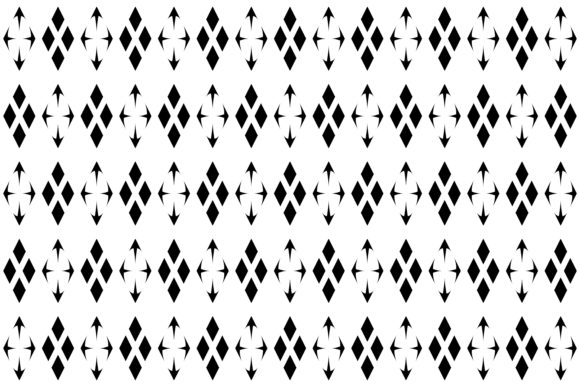
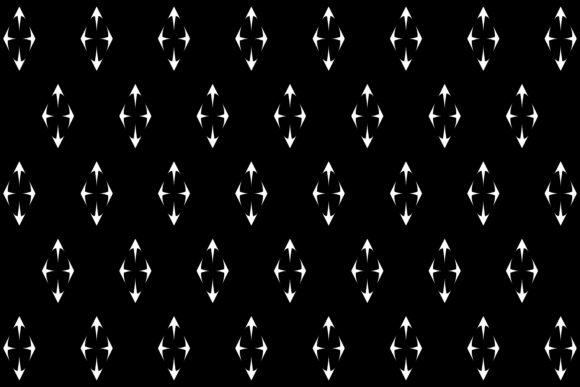
At its core, the Seamless of Four Arrows Tile Pattern is a repeating geometric motif where four arrow-like shapes converge, diverge, or interlock within a single tile unit. The arrows can point inward, outward, or rotate around a central axis, creating a sense of motion that feels both deliberate and organic. When tiled across a surface, the pattern produces a hypnotic, continuously flowing visual field that draws the eye without overwhelming it.
Key characteristics include:
- Modular repetition – Each tile is identical, allowing for infinite extension across any surface size.
- High contrast – The typical white-on-black palette emphasizes sharp lines and negative space.
- Directional energy – Arrows naturally suggest movement, guiding the viewer’s gaze along the design.
- Scalability – From micro-textures on fabric to massive wall installations, the pattern holds its structure at any scale.
For those working with digital assets, a seamless of four arrows tile pattern vector is particularly valuable because it can be resized without loss of quality, adapted to different color schemes, and layered with other graphics. Unlike raster images, vector files retain crisp edges and clean geometry, which is essential for maintaining the pattern’s modern, almost architectural feel.
Why This Pattern Resonates in Modern Design
Contemporary visual culture leans heavily into minimalism, but minimalism done poorly feels empty. The Seamless of Four Arrows Tile Pattern avoids that trap by embedding complexity within simplicity. At first glance, it reads as a clean, orderly grid. On closer inspection, the interplay of arrowheads creates subtle optical effects that reward sustained attention. This dual nature makes it ideal for contexts where you want an immediate visual impact that doesn’t tire quickly.
The monochrome palette is not just an aesthetic choice; it is a functional one. Black and white eliminate color bias, allowing the pattern to coexist with almost any other design element. A bright red logo over a monochrome arrow tile, for example, pops dramatically without clashing. Similarly, a minimalist text overlay remains legible because the pattern’s high contrast provides a stable background rather than a competing foreground.
The Hipster Independent Vibe
There is also a cultural dimension. The term hipster isolated has been used to describe design choices that feel handcrafted, subcultural, and slightly irreverent. The four arrows pattern fits this mold because it references wayfinding symbols and tribal motifs while stripping them down to a purely graphic language. It feels both ancient and futuristic, like a cave painting reimagined by a machine. This duality appeals to brands and creators who want to position themselves as both grounded and innovative.
Practical Applications Across Industries
The Seamless of Four Arrows Tile Pattern is not confined to one medium. Its modular, scalable nature makes it suitable for a wide range of surfaces and contexts. Below are some of the most practical and impactful uses.
Textile and Fashion Design
On cloth and fabric, a repeating arrow pattern adds structure to garments, accessories, and upholstery. Because the design is monochrome, it works as a base layer that can be accented with colored stitching, zippers, or patches. Streetwear brands, in particular, have adopted this style for hoodies, caps, and tote bags, where the pattern signals a thoughtful, design-conscious aesthetic without resorting to loud logos.
For textile production, a seamless of four arrows tile pattern vector ensures that the pattern repeats flawlessly across rolls of fabric, eliminating mismatches at seams. This technical reliability translates directly into cost savings and higher-quality final products.
Wallpaper and Backdrop Design
Interior designers and event planners use the pattern for wallpaper, feature walls, and photographic backdrops. The high-contrast geometry works in both residential and commercial spaces. In a home office, it creates a focused, energetic atmosphere. In a retail environment, it directs foot traffic and frames product displays without overpowering them.
The pattern’s modularity allows for large-scale installations where the arrow motif becomes an architectural feature rather than just a surface treatment. Laser-cut panels, wallpaper wraps, and even floor tiles can carry the design, creating a cohesive spatial experience.
Digital and Print Graphics
For graphic designers, the pattern serves as a versatile background for web pages, presentation slides, social media templates, and print collateral. Its monochrome nature ensures that text and foreground graphics remain readable. When used as a texture in UI design, it adds depth to flat interfaces without increasing load times or distracting from content.
In print—such as posters, book covers, or packaging—the pattern functions as both imagery and texture. A seamless of four arrows tile pattern vector can be printed at high resolution, maintaining sharpness even on large-format posters. This makes it a reliable asset for marketing materials, event branding, and product packaging.
Texture and Illustration
Illustrators and digital artists often use the pattern as a starting point for more complex compositions. By overlaying gradients, masking sections, or combining it with other geometric elements, unique visual stories emerge. The pattern’s inherent rhythm can be broken, rotated, or scaled to create contrast and emphasis.
Who Benefits Most from This Design System?
While the Seamless of Four Arrows Tile Pattern is broadly accessible, certain groups will find it particularly useful:
- Independent creators and small business owners who need a distinctive yet affordable visual identity. A single vector file can be used across merchandise, packaging, and digital channels.
- Interior designers and decorators looking for repeatable patterns that read as modern and intentional rather than generic or kitschy.
- Fashion and textile brands aiming for a monochrome line that stands out in a crowded market without relying on color trends.
- Graphic and UI designers who require a reliable background texture that supports content rather than competing with it.
- Event and exhibition planners who need scalable backdrops that create atmosphere without requiring custom artwork for every surface.
What Works Well
- Versatility – The pattern transitions seamlessly from digital to physical, small-scale to large-scale.
- Timelessness – Because it avoids trendy colors and complex shapes, the design remains relevant across seasons and cultural shifts.
- Ease of integration – The monochrome palette and geometric structure make it compatible with almost any other design element.
- Cost efficiency – A single vector file can be reused endlessly across different applications without requiring new artwork or licensing fees.
What to Keep in Mind
- Not for organic aesthetics – If your project calls for soft, flowing, or natural forms, the sharp geometry of the arrow pattern may feel too rigid.
- Scale sensitivity – At very small scales, the arrow detail may become too fine to read clearly, especially in textile weaves or low-resolution screens. Always test the pattern at your intended output size.
- Potential for visual noise – In large uninterrupted areas, the repeating arrows can create a buzzing effect that some viewers find overstimulating. Pair the pattern with ample negative space or break it with foreground elements.
- Cultural associations – Arrows have directional and symbolic meanings in many cultures. Consider your audience and context to ensure the pattern’s connotations align with your message.
Practical Guidance for Evaluating the Pattern
Before committing the Seamless of Four Arrows Tile Pattern to a project, consider these steps:
- Test at multiple scales – Export the vector at several sizes and view it on the actual medium (screen, fabric, paper) to ensure clarity.
- Assess color flexibility – While white-on-black is the classic treatment, a seamless of four arrows tile pattern vector can be recolored. Experiment with reversed tones (black on white) or muted grays for softer applications.
- Evaluate pairing potential – Place the pattern behind your primary content (text, logos, images) and assess readability at various distances.
- Consider motion – If used in digital media, the pattern’s directional arrows can create a subtle animated effect when scrolled or layered with parallax.
- Sample physical output – For textiles or wallpaper, order a small swatch to see how the pattern behaves on the chosen material. Fabric weave, paper texture, and print resolution all affect the final appearance.
Scenario 1: A Streetwear Brand Launch
A small clothing brand produces a limited run of hoodies and caps. By using the Seamless of Four Arrows Tile Pattern as a screen-printed texture on black cotton, the garments feel design-led without requiring complex multi-color prints. The brand also uses the same vector file for its website background, product tags, and promotional posters, creating a cohesive identity across channels at minimal cost.
Scenario 2: A Co-Working Space Interior
A co-working space wants to create a focused, modern atmosphere in its common areas. The design team applies the arrow pattern to a single feature wall using matte black wallpaper on a white substrate. The pattern’s directional lines subtly guide movement toward the entrance and breakout zones, improving spatial flow without needing signage.
Scenario 3: Digital Product Mockups
A graphic designer creates a set of mockup templates for tech accessories. The seamless of four arrows tile pattern vector is used as a background texture for phone cases, laptop sleeves, and tablet stands. The monochrome design ensures that the product photos look clean and professional, while the pattern adds visual interest that helps the mockups stand out in online marketplaces.
Final Thoughts
The Seamless of Four Arrows Tile Pattern is more than a fleeting design trend. It is a modular, purposeful system that delivers visual impact without sacrificing function. Whether you’re designing a garment, a room, a website, or a brand identity, this pattern offers a reliable foundation that can evolve with your needs. By understanding its strengths and limitations, you can use it not as a mere ornament, but as an integral part of your creative workflow.
For those ready to experiment, starting with a high-quality seamless of four arrows tile pattern vector is the smartest move. It gives you full control over scale, color, and composition, and ensures that your work remains crisp across every application. In a visual world crowded with noise, sometimes the most direct path is the one marked by arrows.