Floral Elements for Decoration: A Comprehensive Evaluation for Designers and Creators
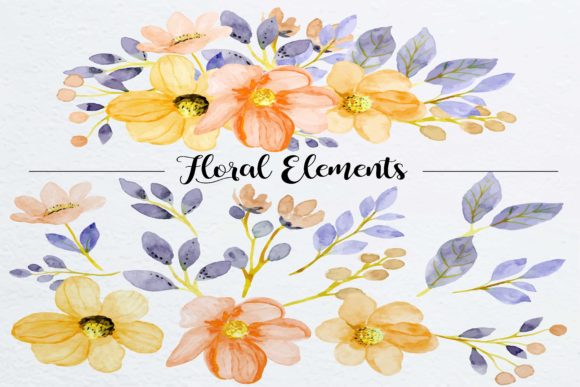
When sourcing botanical artwork for digital or print projects, the choice between creating original illustrations, licensing stock photography, or purchasing a curated clip art package often comes down to time, budget, and design flexibility. Floral Elements for Decoration is a watercolor hand-painted clip art set that offers 14 individual flower elements and one pre-arranged bouquet, all provided in high-resolution PNG format. This article provides a balanced, practical evaluation of this package so you can determine whether it aligns with your creative goals, project requirements, and workflow preferences.
What Is Floral Elements for Decoration?
This product is a collection of 15 botanical illustrations created using watercolor techniques. The set includes 14 separate flower elements—blooms, leaves, stems, and buds—plus one complete bouquet arrangement that combines several of those elements into a cohesive composition. All files are delivered in PNG format, which means each element has a transparent background and is ready to be placed directly into design software without additional cutting out or masking. The illustrations are hand-painted, not digitally simulated, giving them organic texture, subtle color variation, and the natural irregularity that distinguishes watercolor art from vector flat graphics.
Because the elements are standalone, you can use them individually, group them into custom arrangements, or scale and rotate them to fit various layouts. The bouquet file provides a ready-to-use composition for projects where a completed floral design is needed quickly. The high resolution of the PNG files (typically 300 dpi or above) supports professional print applications as well as digital use.
Why Someone Might Be Interested in This Package
The primary appeal of Floral Elements for Decoration lies in its blend of artistic authenticity and practical utility. Hand-painted watercolor illustrations have a soft, organic feel that suits projects where warmth, elegance, or a natural aesthetic is desired. The transparent PNG format eliminates the need for manual background removal, saving time for designers who work in fast-paced environments or have limited experience with complex editing tools.
Professionals and hobbyists alike may be drawn to this set for several reasons:
- Versatility across media – The same elements can be used for wedding invitations, social media graphics, wall art prints, website banners, and product packaging.
- Cohesive visual language – Because all illustrations share the same watercolor style and color palette, mixing and matching elements produces a unified look without extra color correction.
- Time savings – Having pre-painted, ready-to-use botanical art eliminates the hours needed to create original watercolor pieces or to source and license individual stock images.
- High resolution for print – At typical print resolutions, the PNG files can be enlarged to sizes suitable for posters, brochures, or greeting cards without unacceptable pixelation.
Benefits
Natural watercolor texture. Digitally created watercolor effects often look flat or repetitive. Hand-painted illustrations have genuine brush strokes, paint bleed, and subtle opacity variations that lend a tactile quality to printed and digital materials. This can elevate the perceived value of the final design.
Transparent backgrounds. PNG format with transparency means you can layer the floral elements over colored backgrounds, photographs, or textured paper without white halos. This is a significant advantage over JPG or TIFF files that require manual clipping or masking.
Standalone flexibility. Because each flower or leaf is an individual file, you can arrange them in any configuration. You are not limited to the bouquet composition; you can create your own wreaths, borders, repeating patterns, or scattered layouts.
Immediate usability. No need to install fonts, open complex software, or adjust color profiles. The PNG files work in virtually all design applications, from Adobe Photoshop and Illustrator to Canva, Affinity, and online template builders.
Tradeoffs and Limitations
No vector format included. The package provides only PNG (raster) files. If you need to scale the elements to very large sizes—for billboards, large-format wallpapers, or wide banners—raster images will eventually show pixelation. Vector formats such as SVG or EPS allow infinite scaling without loss of quality. This package is not suitable for projects that require extreme enlargement or where the final output resolution exceeds the PNG’s native size by a significant margin.
Limited editing control. The flower elements are flat rendered images. You cannot separate a petal from a stem, change the color of a leaf, or adjust the paint transparency after the fact without careful masking. Users who need to customize colors or deconstruct elements will need to work within the constraints of the provided art. For full control over every brushstroke, a layered source file (PSD or TIFF with layers) would be necessary.
One bouquet arrangement only. While the individual elements can be rearranged, the set contains only a single pre-composed bouquet. If your project calls for multiple distinct bouquet styles (e.g., a bridal bouquet, a bridesmaid’s posy, and a table centerpiece), you will need to manually combine the 14 elements into each arrangement. That may be acceptable for some users but could be a drawback for those expecting a variety of ready-to-use compositions.
Watercolor style may not suit all aesthetics. The organic, often soft and imperfect nature of watercolor illustrations is beautiful in many contexts, but it may clash with minimalist, highly polished, or corporate design directions. If your brand guidelines call for precise geometric lines or flat illustration styles, this package will feel mismatched.
When Is Floral Elements for Decoration a Strong Fit?
This package is especially well suited for projects where a delicate, handcrafted look is desirable and where the work will be displayed at moderate sizes. Some specific scenarios:
- Wedding and event invitations. Watercolor florals are a classic choice for save-the-dates, ceremony programs, and thank-you cards. The bouquet file can serve as a central motif, while individual elements can decorate envelopes or enclosure cards.
- Logo design for small brands. Boutique businesses—florists, bakeries, boutiques, wellness studios—often use floral emblems. A single watercolor bloom can become a logo mark, and the other elements can support brand collateral.
- Digital wallpaper and screen backgrounds. The high-resolution PNGs work well for phone backgrounds, desktop wallpapers, or website hero images where the art remains at a fixed display size.
- Pattern design for fabric or stationery. By repeating and rotating the individual leaf and flower elements, you can build seamless patterns for print-on-demand products like gift wrap, tote bags, or notebook covers.
- Social media templates. The transparency allows quick placement over Instagram stories, Facebook posts, or Pinterest pins. The natural aesthetic attracts engagement for lifestyle and DIY content.
When Alternatives Might Be Worth Considering
There are situations where another type of floral asset may serve you better.
Vector clip art or editable illustrations. If you plan to resize the flowers dramatically, create complex repeating patterns, or alter colors for multiple variations, consider vector packages (SVG, AI, EPS). Vectors also integrate seamlessly with cutting machines (like Cricut or Silhouette) and can be recolored instantly. Floral Elements for Decoration is not the right choice for those workflows because it lacks editability and scalability.
Layered PSD files with individual paint layers. Digital artists who want to adjust the opacity, blend modes, or brush textures of each flower might prefer a layered Photoshop file. The PNG format flattens all paint into a single layer, so no adjustments to the painting itself are possible after import.
Royalty-free stock photography of actual flowers. For photorealistic floral designs, a stock photo of a fresh or dried bouquet provides depth, lighting, and detail that watercolor cannot replicate. Conversely, some contexts require clean vector icons rather than painted art. Evaluating the required realism is essential before purchasing.
Subscription-based asset libraries. If you need many different floral styles across multiple projects, a subscription to a resource site (such as Envato Elements or Creative Market’s bundles) may offer better long-term value. A single package like this one is most cost effective when you know you’ll reuse the same style repeatedly.
Decision-Making Insights for the Reader
To determine whether Floral Elements for Decoration matches your needs, start by mapping your project’s requirements against the package’s capabilities:
- Scale and Output Size. Determine the largest dimension at which the floral elements will be printed or displayed. If it exceeds 3 feet (roughly 1 meter) in width, raster format may cause visible pixels. For smaller formats—cards, flyers, social media, labels, or wall art up to poster size—the high-resolution PNGs will perform well.
- Need for Customization. Ask yourself whether you need to change colors, resize individual petals, or combine elements in a way that the original artwork doesn’t support. If you require significant modifications, you may be better served by a vector or editable layered file.
- Design Consistency. Consider how many separate floral illustrations you actually need. With 14 individual elements and one bouquet, this set offers modest variety. For a wedding suite that demands many different flower types, additional clip art packages or custom painting may be required.
- Style Fit. Compare the watercolor aesthetic to your brand guidelines or client preferences. If your audience values precision or modern minimalism, watercolor may feel out of place. If they appreciate artisan, organic, or romantic visuals, it will feel right at home.
- Budget and Reuse Potential. Assess how many projects you have that could use this same floral style. If you design for multiple clients with different tastes, a single package may not provide enough stylistic return on investment. If you have a recurring need for watercolor botanicals (e.g., for a seasonal product line or a personal stationery business), the one-time cost can be very efficient.
In practice, a good approach is to download sample elements or test the resolution by opening the files in your design software before committing to a full project. Many marketplaces offer preview files for this purpose. Once you have confirmed that the pixel dimensions, style, and number of elements meet your requirements, the package can streamline your workflow considerably.
Final Evaluation
Floral Elements for Decoration is a thoughtfully created set of hand-painted botanical illustrations that balances aesthetic quality with practical usability. Its PNG format is both a strength (transparency, wide compatibility) and a limitation (no infinite scaling, no color edits). The package excels in projects where moderate print sizes, warm natural appeal, and time savings are top priorities. It is less suitable for large-format production, highly customizable designs, or vector-dependent workflows. By weighing the factors above, you can decide whether this watercolor clip art aligns with your specific needs—or whether an alternative format or source would serve you better.