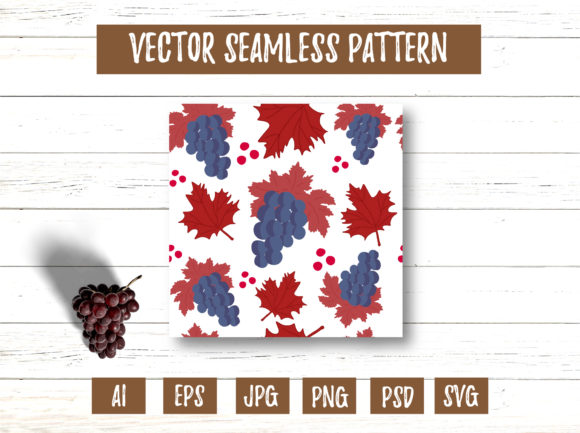
Red Maple Leaves Grape Seamless Pattern: What You Need to Know Before Using It
If you’ve come across the Red Maple Leaves Grape Seamless Pattern, you already know it captures the warmth of autumn—rich reds, deep grape tones, and the organic beauty of falling leaves and clustered fruit. It’s marketed for harvest and Thanksgiving projects, and the file package includes a generous set: one seamless pattern in JPG (3600x3600 px at 12x12 inches), one PNG with transparent background, one AI vector, one EPS vector, one SVG file, and one PSD layered file. Mockups and photos are not included, but the raw assets are designed to fit t-shirts, posters, greeting cards, mugs, and more.
But having a versatile pattern file is only half the story. Many people—beginners and experienced creators alike—make small but costly mistakes when choosing, applying, or scaling these patterns. Understanding a few common pitfalls will save you time, money, and frustration, and help you produce professional-quality work from the start.
Mistake #1: Assuming All Files Are Print-Ready Without Checking Resolution and Color Mode
The JPG version is 3600x3600 pixels at 12x12 inches, which resolves to 300 DPI—perfect for most print applications. However, the PNG with transparent background may default to 72 DPI or an RGB color profile, which can cause washed-out colors or fuzzy edges when sent to a commercial printer. The vector files (AI, EPS, SVG) are resolution-independent, but they also need proper color mode (CMYK for print) and embedded profiles if you plan to use them in professional workflows.
Real example: A small business owner printed greeting cards using the PNG directly without converting to CMYK. The “grape” tones turned muddy purple, and the reds lost vibrancy. The fix was simple: open the AI or EPS file, confirm color space (prefer CMYK), and export a new PNG at 300 DPI. Always check your output file’s resolution and color profile before sending to print.
Better approach: Start with the vector file (AI or EPS) if you have Adobe Illustrator. Convert to CMYK, adjust colors if needed, then export a high-res PNG or JPG at 300 DPI. For screen use, the original PNG works well, but for anything physical, invest a few minutes in color mode verification.
Mistake #2: Ignoring the Difference Between Raster and Vector Files
Beginners often open the JPG, resize it, and wonder why it gets blurry. The Red Maple Leaves Grape Seamless Pattern includes both raster (JPG/PNG) and vector (AI/EPS/SVG) formats for a reason. Raster files are made of pixels; enlarge them beyond 100% and quality degrades. Vector files are built on mathematical curves and can scale to any size without losing sharpness.
What often goes wrong: A blogger tries to use the JPG as a background for a large poster (24x36 inches). Upscaling in image editing software creates visible pixelation and a soft, unprofessional look. The solution is to use the vector file, which can be scaled to billboard size without loss. Even if you don’t own Illustrator, many free tools like Inkscape or online converters can import SVG or EPS and export a clean raster at the needed resolution.
Practical checklist: For small items (mugs, phone cases, greeting cards up to 5x7 inches), the provided JPG is fine. For anything larger than 12x12 inches, switch to the vector files. For T-shirts with large central prints, use the vector or the high-res PNG scaled properly.
Mistake #3: Overlooking the Seamless Test
Not all patterns labeled “seamless” tile perfectly in every application. The Red Maple Leaves Grape Seamless Pattern is designed to repeat without visible seams, but that depends on how you apply it. If you simply place the image as a single block, you won’t see the repeat. But if you use it as a filling pattern in Photoshop, Illustrator, or Canva, you need to confirm it matches exactly.
How to test: In Photoshop, define the pattern (Edit > Define Pattern), create a new document, and fill a large area. In Illustrator, use the pattern swatch or Object > Pattern > Make. Look for any obvious lines or misaligned leaves at the four edges. The best seamless patterns are mathematically tileable, but it never hurts to verify before committing to a production run.
Common oversight: A designer used the pattern in a repeat for a fabric print without checking the edges. The seam appeared as a thin white line where maple leaves didn’t connect. The issue was that they used the JPG version, which had a slight background edge. Switching to the PNG with transparent background and using it as a pattern fill eliminated the problem. If you see a seam, try using the transparent PNG or the vector version with a clipped artboard.
Mistake #4: Forgetting to Coordinate Colors With Your Project’s Palette
The autumn colors in this pattern—red maple and grape—are beautiful but strong. They can clash with other elements if you don’t pay attention to the overall palette. “Red maple” can range from true crimson to warm brick red; “grape” leans toward deep purple with warm undertones. These colors evoke a cozy, harvest mood, but they might not fit a minimalist brand or a cool-colored product.
What can happen: A seller used the pattern on a navy blue mug. The dark grape tones disappeared into the background, and only the red leaves stood out, ruining the balanced look. A better choice would be a lighter base like cream, warm beige, or muted gold to let both colors shine. Alternatively, extract the exact hex codes from the pattern (using a color picker) and adjust your complementary elements accordingly.
Suggestion: Before designing, create a small color swatch from the pattern (dominant red, deep grape, and any neutrals like leaf veins or background tint). Then use those colors in your typography, borders, or secondary graphics. This ensures visual harmony and prevents accidental clashing.
Mistake #5: Not Checking Commercial Licensing or Usage Limitations
The product listing might not explicitly discuss licensing, and many patterns sold online come with restrictions—personal use only, limited commercial use, or specific caps on print runs. Even though the Red Maple Leaves Grape Seamless Pattern is offered for t-shirts, posters, and mugs, you must verify whether those uses are allowed under the buyer’s license. Skipping this step can lead to copyright issues or sales takedowns later.
How to protect yourself: Always check the item description, seller’s terms, or included license file (often a PDF or text file in the zip folder). Look for keywords like “commercial use,” “unlimited,” or “print-on-demand.” If you plan to sell products featuring this pattern, consider reaching out to the creator for confirmation. When in doubt, treat it as personal use only until you have written permission.
Better habit: Save the purchase confirmation and any license text in the same folder as your project files. That way, you have proof if a platform like Redbubble or Etsy asks about your rights. A little upfront checking prevents big headaches later.
Mistake #6: Misunderstanding the Included Mockup Disclaimer
The listing clearly states “MOCKUP NOT INCLUDED PHOTO NOT INCLUDED.” Some buyers assume the pattern will be automatically applied to product templates. Without the included mockup, you’ll need to create your own product preview images or use separate mockup files. This can stall a project if you expected ready-made advertising visuals.
What to do instead: If you need mockups for t-shirts, mugs, or posters, download free or paid mockup templates from reputable sites. Many are compatible with Photoshop or Canva. Alternatively, use the PNG with transparent background and manually place it onto a product photo using layer blending. Just remember to set aside extra time for this step.
Pro tip: Because the pattern is seamless, you can create your own mockup by tiling it across a product shape. For a mug wrap, duplicate the pattern, rotate as needed, and use a cylindrical warp effect in Photoshop. The vector files make this especially easy because you can resize the pattern without quality loss.
Mistake #7: Overlooking File Organization and Backup
The zip folder contains seven files: one seamless pattern digital paper in PNG, one JPG, one AI, one EPS, one SVG, one PSD, plus perhaps a license file. Beginners sometimes open only the JPG and delete the rest, only to need the vector later. Others lose the AI or EPS files when they upgrade software and find them incompatible.
Better practice: Keep the entire zip folder archived in a dedicated “Design Assets” library. Extract all files into a named folder (e.g., “Red Maple Leaves Grape Seamless Pattern”). Note the software versions: AI CS4 and EPS CS4 are older formats, but they open in newer versions of Illustrator. If you use free vector editors like Inkscape, the SVG file is usually the safest bet.
Real case: A freelancer needed to enlarge the pattern for a trade show banner but couldn’t find the EPS file because they only saved the JPG on their desktop. Hunting down the download link and re-downloading wasted an hour. Store everything together from the start.
Putting It All Together: Getting the Most From This Pattern
The Red Maple Leaves Grape Seamless Pattern is a versatile asset for autumn-themed designs. To avoid common mistakes and achieve professional results, follow these steps:
- Open the vector file (AI or EPS) as your primary source; convert to CMYK for print projects.
- Test the pattern for seamless tiling in your design software before using it in a repeat.
- Coordinate the red and grape colors with your project palette; use a color picker to match exactly.
- Verify licensing terms for commercial use, especially if selling products.
- Create your own mockups using the transparent PNG or vector fill; don’t rely on non-existent included previews.
- Keep all files organized in one folder for easy access and backup.
When you approach the pattern with these considerations, you’ll save time, maintain quality, and produce designs that look intentional and polished. Whether you’re designing a Thanksgiving greeting card, a cozy harvest T-shirt, or a set of autumn mugs for your shop, this pattern can deliver exactly the cozy, seasonal feel you want—just be mindful of the details that separate a good design from a great one.