The Versatile Appeal of the Mandala Pattern Star Ornament in Modern Creative Workflows
In an era where visual identity and precise design assets define brand success, the Mandala Pattern Star Ornament has emerged as more than just a decorative element. It is a scalable, multifaceted tool that bridges traditional craftsmanship with modern digital production. For professionals across design, marketing, manufacturing, and event planning, understanding the practical applications and strategic value of this ornament can streamline workflows and elevate output quality. This article explores what the Mandala Pattern Star Ornament is, why it commands attention in today's market, and how it meets the evolving demands of creative and commercial enterprises.
What Is the Mandala Pattern Star Ornament?
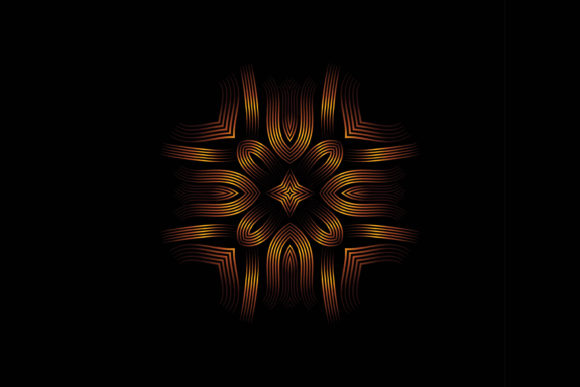
A mandala pattern star ornament is a geometric design that combines the symmetry of a mandala with the radiating structure of a star. Typically built around a central focal point, it uses repeating motifs, concentric rings, and pointed star-like extensions to create an intricate, balanced composition. Unlike simple clip art, this ornament is delivered as a high-resolution vector file — most commonly in JPEG for quick previews and AI (Adobe Illustrator) format for editable, scalable use. This dual-format delivery ensures that the ornament can be printed at any size without loss of fidelity or cut precisely using digital plotters and laser cutters.
The ornament's design logic draws from centuries-old mandala traditions found in Hindu and Buddhist art, as well as Islamic geometric patterns. However, its contemporary rendering as a mandala pattern star ornament modernizes these motifs for commercial use. It is neither purely sacred nor purely ornamental; it is a functional asset that adapts to diverse media — from wedding invitations to henna stencils, fabric prints, tablecloths, knitting patterns, and even architectural decorations.
Rise of Scalable Digital Assets for Creative Entrepreneurs
The creative economy has shifted toward digital-first production. Freelance designers, print-on-demand sellers, and small manufacturers require assets that are versatile, editable, and ready for multiple outputs. The Mandala Pattern Star Ornament meets this need precisely. Its vector nature (AI file) allows scale changes without redrawing, making it ideal for products ranging from small fringe ornaments on earrings to large format wall murals. The accompanying JPEG file provides an immediate visual reference for clients or approval workflows.
This dual-file approach aligns with the trend of “asset efficiency” — one design, many uses. For instance, a wedding planner can use the same ornament as a laser-cut save-the-date card, a tablecloth pattern, a cake stencil, and a backdrop projection. The ornament becomes a cohesive visual language across an entire event, increasing perceived value while reducing design iteration costs.
Convergence of Traditional Decor and Modern Manufacturing
Wedding supplies and event decoration industries have seen a resurgence of intricate, handcrafted aesthetics, but clients still demand speed and consistency. A mandala pattern star ornament bridges this gap. Laser cutting, CNC routing, and digital printing rely on precise vector data. The AI file allows manufacturers to adjust cut paths, add perforations, or scale nested patterns for material efficiency. This is particularly relevant in the home decor sector, where customized tablecloths, doilies, curtains, and wood inlays require repeatable, symmetrical designs.
Multifunctionality Across Disciplines
Professionals are drawn to the Mandala Pattern Star Ornament because it reduces the need for multiple design files. A single ornament can serve as:
- A stamp or stencil for henna painting on skin or fabric.
- A knitting chart for intarsia or fair isle patterns on scarves and blankets.
- A cutting template for papercraft, cardmaking, and vinyl decals.
- A repeat motif for tablecloth borders or embroidery hoops.
- A graphic element for website headers, social media posts, and digital backgrounds.
This breadth of application is a direct response to the market's demand for “design adaptability.” Creators no longer want to purchase separate assets for each medium; they want one high-quality vector that can be repurposed with minimal modifications. The mandala pattern star ornament satisfies that expectation by offering inherent symmetry and clean geometry that translates well across both tactile and digital surfaces.
Economic and Workflow Efficiency
For entrepreneurs running small-scale production lines, time is money. A vector file in AI format allows direct manipulation of anchor points, color separations, and size variations. Instead of hiring a graphic designer to redraw a pattern for each new product SKU, a business owner can purchase a single ornament and adapt it in-house. The JPEG version also serves as a mockup placeholder during client presentations, reducing the number of revision cycles.
Consider a business that creates laser-engraved wedding signage. Using the same Mandala Pattern Star Ornament across mirrored acrylic, wood veneer, and paper ensures visual consistency. The ability to open the AI file, tweak stroke weights for different materials, and export cut-ready SVG or DXF files saves hours per project. This efficiency directly impacts profitability and turnaround time.
Shift Toward Personalization at Scale
Modern consumers expect unique, personalized products — but businesses still need to produce them efficiently. The mandala pattern star ornament enables mass customization. A wedding stationery designer can offer multiple colorways of the same ornament, or combine it with custom text, while maintaining a consistent base pattern. The vector file's editable layers allow separating the star from the background mandala, enabling creative variations such as embossing only the star points or using the ornament as a centerpiece medallion.
Rise of DIY and Craft Entrepreneurship
Platforms like Etsy, Shopify, and social media marketplaces have fueled a boom in handmade and custom products. Sellers often lack formal design training but need professional-looking patterns. The ready-to-use Mandala Pattern Star Ornament provides a polished starting point. A knitter can import the AI file into a pattern rasterizer to convert it into a knitting chart; a henna artist can print the ornament as a practice guide and later use a stencil cut from the same vector. This democratization of design reduces barriers for entry-level creators while still meeting quality standards.
Integration With Digital Manufacturing Tools
Software ecosystems like Adobe Illustrator, CorelDRAW, Inkscape, and LightBurn are the backbone of modern making. The AI file format is native to Illustrator, but it is also compatible with many cutting and engraving software after conversion. Professionals in signage, woodworking, and textile printing increasingly look for designs that “just work” in their toolchain. The mandala pattern star ornament, delivered as an AI file, eliminates the frustration of file conversion errors or broken paths often associated with raster images.
Example 1: Wedding Stationery and Decor Suite
A wedding planner assembles a full suite using a single Mandala Pattern Star Ornament. The JPEG is used on the wedding website background and Instagram save-the-date. The AI file is opened in Illustrator, resized, and laser-cut on vellum for the invitation outer envelope. A second copy is scaled down to make place cards. A larger version is cut from plywood to serve as a table centerpiece base. The entire product family shares a unified motif, reinforcing the wedding's theme without requiring multiple design purchases. The client appreciates the cohesive look, and the planner reduces sourcing time from five design files to one.
Example 2: Henna Artist's Stencil Library
A professional henna artist builds a reusable stencil library. The mandala pattern star ornament is printed out at various sizes using the JPEG for reference, but the AI file is used to plot a Mylar stencil on a vinyl cutter. The star-and-mandala combination works well for arm bands and large back pieces because the radial symmetry ensures even distribution. The artist can also rotate or mirror the ornament to create mirrored pairs for bilateral designs. This reduces drawing time by 60% while maintaining intricate detail that would be difficult to replicate freehand.
Example 3: Textile and Knitting Pattern Design
A small-batch apparel brand experiments with a knitted line of scarves. The designer imports the AI file into a pattern-making tool that converts vector paths into stitch charts. The star motif becomes a repeating pattern in a fair isle sweater, while the mandala rings become a lace border. Because the ornament uses clean lines and geometric precision, the stitch count remains balanced, reducing material waste. The brand markets the scarf as “digitally designed, handcrafted” — a compelling story for modern consumers who value technology-meets-tradition.
From Static Asset to Platform Component
The Mandala Pattern Star Ornament represents a broader shift toward component-based design. In software and product development, reusable components accelerate creation. Similarly, in graphic arts and manufacturing, a single ornament file functions as a component that can be layered, repeated, and transformed. This mirrors the modular design philosophy seen in architecture, UI/UX, and even business systems. The ornament is not just a pretty picture; it is a functional building block.
Sustainability and Material Efficiency
As industries strive to reduce waste, vector-based designs contribute to material optimization. When a mandala pattern star ornament is used for laser cutting, the paths can be nested tightly to minimize scrap. The AI file allows designers to test different layouts quickly using digital simulation, cutting down on physical prototypes. This aligns with the growing lean manufacturing and sustainable production movement within small-to-medium enterprises.
Digital Inclusion and Skill Democratization
The availability of high-quality vector ornaments like this one lowers the technical bar for creators. A freelance marketer can use the JPEG for social media graphics; a mechanical designer can import the AI into their CAD software for etching. The same asset serves different skill levels, promoting cross-disciplinary collaboration. In an economy where versatility is valued, the mandala pattern star ornament exemplifies how a single file can empower professionals across vastly different fields without requiring deep expertise in vector editing.
Why the File Format Matters: JPEG and AI in the Real World
The inclusion of both JPEG and AI file formats is not incidental. The JPEG provides an immediate, universally viewable preview. It is used for quick mockups, client approvals, and time-sensitive social media content. The AI file is the workhorse — editable, scalable, and precision-oriented. Together, they cover the full scope of a project lifecycle: from inspiration to final production. Professionals value this duality because it removes friction between concept and execution. An entrepreneur can open the JPEG in Canva for a rapid edit, then pass the AI to a print shop with confidence that the output will match the vision.
Final Observation
The Mandala Pattern Star Ornament is not merely a trendy design asset. It is a practical answer to the modern creator's need for efficiency, consistency, and cross-medium adaptability. Whether applied to wedding supplies, henna artwork, knitwear, or tablecloths, this ornament holds value because it saves time, reduces costs, and scales across projects. By investing in a single, well-crafted vector file, professionals gain a reusable resource that grows with their business. In a marketplace that prizes speed without sacrificing aesthetics, the mandala pattern star ornament has carved out an enduring role.